

Microsoft SQL Server 2022 Enterprise
Scale beyond Standard constraints.
Run mission-critical workloads with operating-system-scale compute and memory, full Always On availability groups and enterprise operations—licensed per core for unlimited users and devices.
Per Core licensing covers access without separate SQL Server CALs. Select the correct number of licensed cores for the deployment.

 Perpetual core licensing
 OS-scale compute & memory
 Up to 8 AG secondaries
 Digital delivery + support
Enterprise is an architectural decision
The edition for ceilings your critical workload cannot accept.
SQL Server 2022 Enterprise changes the scale, availability and operational envelope available to database architects—especially where sustained concurrency, maintenance windows and recovery design determine business risk.
Database Engine compute
Standard is limited to the lesser of four sockets or 24 cores.
Buffer-pool memory
Standard has a 128 GB buffer-pool limit per instance.
Always On availability
Up to eight secondary replicas, including five synchronous replicas.
Failover clustering
Enterprise supports larger clusters than Standard's two-node limit.
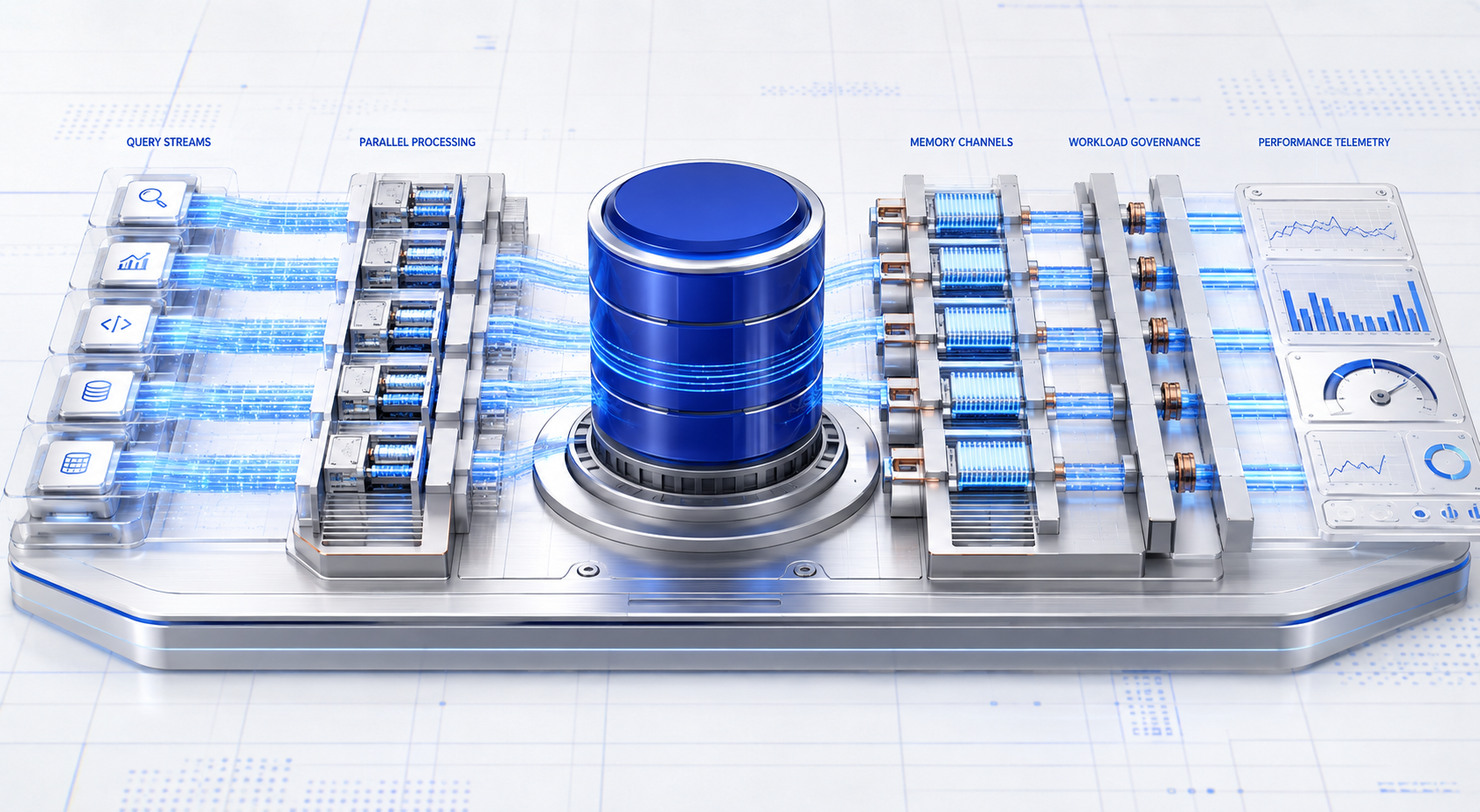
Performance with an operating model
Headroom matters. Control matters more.
Enterprise gives database teams tools to shape how large, mixed workloads behave—not only more capacity.
- Resource Governor: govern CPU, memory and I/O across workload groups.
- Online operations: reduce the maintenance footprint for indexes and schema changes.
- Readable-replica insight: capture Query Store information where read-scale traffic runs.
- Enterprise IQP: use automatic tuning, DOP feedback, CE feedback and a broader intelligent-processing envelope.
Enterprise control plane
Capabilities that change the DBA runbook.

Resource Governor
Classify and govern mixed workload demand across shared database infrastructure.

Online operations
Create and rebuild indexes online, resume rebuilds and perform online schema changes.

Automatic tuning
Use Enterprise-only tuning capabilities to stabilise plan behaviour.
Query Store on secondaries
Observe and tune read workloads executing on availability replicas.
Parallel operations
Use parallel index maintenance and enterprise scalability enhancements.

Advanced analytics
Use all available cores for advanced R and Python integration, subject to hardware limits.
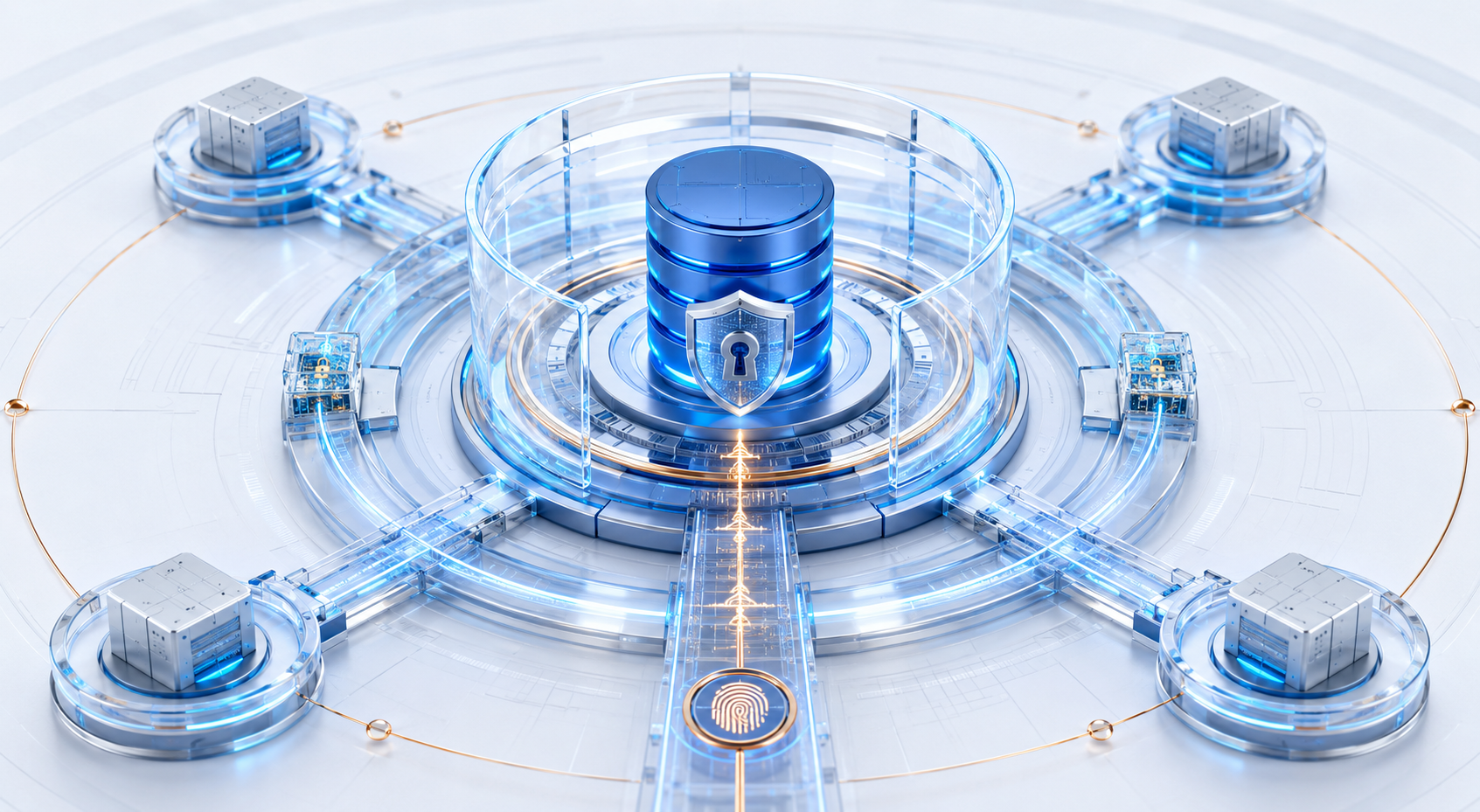
Availability architecture
Design for failure before failure chooses the design.
Full availability groups, contained and distributed availability groups, online restore, automatic connection rerouting and larger failover clusters give architects more credible options for demanding recovery objectives.
Security with operational resilience
Protect the data—and the process around it.
SQL Server 2022 provides TDE, encrypted backups, Always Encrypted with secure enclaves, Ledger, auditing, classification, row-level security and dynamic data masking.
TDE, Ledger and secure enclaves are not Enterprise-exclusive. Enterprise's advantage is the architecture around them: greater scale, richer availability, online operations and workload governance.
SQL Server 2022 vs SQL Server 2019
A stronger successor for hybrid, observable and adaptive estates.
The upgrade case rests on specific architectural improvements—not unsupported benchmark percentages.
Azure SQL Managed Instance link
Replicate for supported disaster-recovery and migration scenarios without replacing the on-premises estate first.
Contained availability groups
Carry relevant metadata such as users, permissions and SQL Agent jobs with the availability group.
Query Store on secondary replicas
Diagnose read workloads where they execute—an especially valuable Enterprise capability.
Query Store hints
Shape query plans through Query Store without changing application code.
Parameter Sensitive Plan optimisation
Keep multiple active cached plans for one parameterised statement when data distributions differ.
Persistent and percentile feedback
Retain memory-grant learning and use multiple prior executions for variable requirements.
Ledger
Add tamper-evidence and cryptographic verification for stronger audit scenarios.
Entra authentication and richer T-SQL
Modernise identity while gaining time-series, JSON, windowing and bit-manipulation additions.
Edition comparison
Enterprise vs Standard: compare the constraints that shape the system.
Swipe horizontally to view the complete table.
| Decision factor | Enterprise 2022 | Standard 2022 |
|---|---|---|
| Database Engine compute | Operating-system maximum | Lesser of 4 sockets or 24 cores |
| Buffer-pool memory | Operating-system maximum | 128 GB |
| Columnstore cache / memory-optimised data | Unlimited / unlimited | 32 GB / 32 GB |
| Availability groups | Full AGs; up to 8 secondary replicas | Basic AG; 2 replicas and 1 database |
| Failover cluster instances | Up to 16 nodes | Up to 2 nodes |
| Resource Governor | Included | Not included |
| Online index create and rebuild | Included | Not included |
| Query Store on secondary replicas | Included | Not included |
| Automatic tuning | Included | Not included |
| TDE, Ledger and secure enclaves | Included | Included |
| Data compression and partitioning | Included | Included |
| Parameter Sensitive Plan optimisation | Included | Included |
Based on Microsoft's SQL Server 2022 edition matrix. Verify current documentation and Product Terms for the intended deployment.
Per Core licensing explained
Unlimited access does not mean unlimited cores.
Per Core licensing is practical when users, devices or external access are difficult to count. The licensable metric is processing capacity.
Read “Unlimited User CALs” correctly
It is purchasing shorthand. Under Microsoft's Per Core model, separate SQL Server CALs are not required. Correctly licensed core capacity can be accessed by unlimited users and devices; there is no separate unlimited-CAL entitlement.
- Core licences are sold in two-core packs.
- Determine whether physical cores or virtual cores are being licensed.
- Microsoft minimum core counts still apply.
- Software Assurance, subscription benefits, Azure services and unlimited virtualisation are not assumed unless explicitly listed.
Deployment readiness
Check the platform before buying the licence.

Supported platform
Enterprise installs on supported Windows Server editions—not Windows 10 or Windows 11. Microsoft lists Windows Server 2016, 2019, 2022 and 2025 families.
Processor
x64 only; 1.4 GHz minimum and 2.0 GHz or faster recommended. Production sizing must reflect the real workload.
Memory
1 GB minimum for non-Express editions; 4 GB or more recommended, with capacity increased as data and workload grow.
Storage and software
At least 6 GB free for installation, more for components and data, plus .NET Framework 4.7.2 on Windows.

Migration planning
Baseline Query Store, test drivers and compatibility levels, validate HA and rehearse rollback before cutover.

Security design
Plan service accounts, least privilege, key custody, backup encryption and network controls before installation.
Expert buying questions
Microsoft SQL Server 2022 Enterprise FAQs.
Does Per Core licensing require SQL Server user or device CALs?
No. Correctly licensed core capacity may be accessed without separate SQL Server CALs. “Unlimited User CALs” should be read as unlimited user/device access under Per Core licensing.
How many cores should I buy?
Count the licensable physical or virtual cores, apply Microsoft minimums and remember that core licences are sold in two-core packs. Validate the current Product Terms for the topology.
Why choose Enterprise instead of Standard?
Choose Enterprise when Standard's 24-core and 128 GB buffer-pool limits, basic availability group, two-node clustering, lack of Resource Governor or offline-only index operations create design risk.
Are TDE, Ledger and secure enclaves exclusive to Enterprise?
No. Microsoft lists these in both Enterprise and Standard. Enterprise's distinction is the surrounding scale, availability, governance and online-operations envelope.
What makes SQL Server 2022 stronger than SQL Server 2019?
SQL Server 2022 adds Azure SQL Managed Instance link, contained availability groups, Query Store hints, Query Store on secondaries, Parameter Sensitive Plan optimisation, persistent and percentile memory-grant feedback, Ledger, Entra authentication and new T-SQL capabilities.
Can Enterprise be installed on Windows 11?
No. Microsoft does not list SQL Server 2022 Enterprise as supported on Windows 10 or Windows 11. Use a supported Windows Server edition or review separate Linux requirements.
Does the licence include Azure services?
Not automatically. Azure-connected features can require separate configuration, service eligibility and consumption charges.
Can I run unlimited virtual machines?
Do not assume so. Unlimited virtualisation generally requires qualifying Enterprise licensing with active Software Assurance or subscription rights and full host coverage.
What support dates apply?
Microsoft lists mainstream support through 11 January 2028 and extended support through 11 January 2033. Connected services follow their own lifecycle policies.
Why Software Mart Australia
Enterprise software deserves a human handoff.
The current listing highlights electronic delivery, installation and activation guidance, remote support, a refund-or-replacement guarantee, worldwide use and an Australian GST-registered business.
Expert support
Guidance for product download, installation and activation.
Digital delivery
Electronic fulfilment designed for fast deployment.

Purchase assurance
Refund or replacement support as described in the product listing.
Research standard
Technical claims checked against Microsoft sources.
This page avoids unsupported benchmark percentages and distinguishes Enterprise-only capabilities from shared SQL Server 2022 features.
Ready for the next workload?
Choose the core quantity your architecture actually needs.
Buy Microsoft SQL Server 2022 Enterprise with digital delivery and expert support—then validate licensing, platform and migration details before production cutover.
Related Microsoft licensing
Compare the closest alternatives before you buy
Review the edition, version and licensing model that best matches your deployment.